Nervous System Familiarity Bias - Is it Keeping You Stuck?

Kelly Walker • October 23, 2024

Why the Nervous System Chooses Familiar Chaos Over Unfamiliar Peace


As humans, we are wired for survival, and our nervous system plays a key role in keeping us safe. But sometimes, this natural defense mechanism can trap us in patterns of behaviour that feel familiar, even when they’re not what we truly desire. You’ve likely heard the saying, “better the devil you know than the devil you don’t.” This phrase captures the essence of why we often stick to the known, even if it’s causing us stress or unhappiness.


Our nervous system, operating below our conscious awareness, has a tendency to choose familiar chaos over unfamiliar peace. But why is this?


The Comfort of Familiarity

At its core, the nervous system seeks safety and predictability. Anything new or unfamiliar can be perceived as a potential threat. Even when we are consciously aware that a new environment, relationship, or job might be better for us, our nervous system is programmed to default to what it knows. Familiarity, even if it’s uncomfortable or painful, offers a sense of certainty that the unknown doesn’t.


In a work setting, for example, you might know that your job is burning you out. Your workload is overwhelming, your stress levels are through the roof, and you feel disconnected from your sense of purpose. Yet, making a change - whether it’s reducing your hours, switching roles, setting boundaries or even leaving the organisation - feels too risky. So, you stay put. You choose the stress and exhaustion you know because, in the back of your mind, the idea of stepping into the unknown triggers a deeper fear.


The Power of Conditioning

Our nervous system is shaped by past experiences, conditioning us to respond in ways that helped us survive previously. This conditioning runs deep, often starting in childhood. If we learned early on that it’s safer to avoid conflict, to stay small, or to put others’ needs before our own, our nervous system will continue to default to those patterns.


For example, if you grew up in an environment where you had to walk on eggshells to keep the peace, your nervous system might associate speaking up for yourself with danger. Even if you’re now in a workplace or relationship where expressing your needs is perfectly acceptable, your nervous system may still trigger a fight, flight, freeze, or fawn response, convincing you that it’s safer to remain silent.


In these moments, we are not consciously choosing discomfort; our nervous system is. It’s conditioned to choose the familiar response, even if it’s no longer serving us.


The Fear of Uncertainty

Uncertainty can feel incredibly unsettling, especially when we’ve been conditioned to associate predictability with safety. The nervous system thrives on what it knows, so stepping into “unfamiliar peace” - a new, potentially better situation - requires us to face uncertainty head-on. And uncertainty is often interpreted by the nervous system as a threat, setting off a cascade of stress responses designed to keep us safe.


The challenge, then, is that what is actually safer and more aligned with our wellbeing is often perceived by the nervous system as dangerous simply because it’s unfamiliar. Whether it’s leaving a toxic work environment, stepping away from unhealthy relationships, or choosing a new path in life, the unknown can feel more dangerous than it truly is, leading us to choose the familiar - even when that familiarity is detrimental to our mental, emotional and physical health.


Breaking the Cycle

So, how do we break free from this cycle of choosing the familiar chaos over the unfamiliar peace? The answer lies in nervous system regulation and a gradual rewiring of our internal responses.


  1. Awareness: The first step is awareness. Recognising that your nervous system is playing a role in keeping you stuck can be empowering. This understanding allows you to step back and observe your behaviour without judgment.
  2. Nervous System Regulation: Practices like breathwork, meditation and somatic exercises help to regulate the nervous system, creating more capacity to handle the unknown. When your nervous system is calm, you’re better equipped to make conscious choices, rather than reacting out of fear or past conditioning.
  3. Taking Small Steps: You don’t have to leap into the unknown all at once. Start by taking small, manageable steps toward change. Each time you push your comfort zone, you expand your nervous system’s capacity to handle uncertainty. Over time, what once felt terrifying may become more tolerable, even exciting.
  4. Seek Support: It’s also helpful to seek support, whether from a coach, therapist, or trusted friend. Having someone to help you navigate the unknown can make the process feel less daunting, and they can offer a perspective that your nervous system may not currently see.


Embracing the Unfamiliar

While our nervous system might prefer the certainty of familiar chaos, it’s important to remember that we have the power to choose differently. It takes time and patience to retrain the nervous system to feel safe in the unknown, but it is possible.


The next time you find yourself hesitating to make a change that you know, deep down, will improve your life, take a moment to check in with your nervous system. Acknowledge its desire for safety and predictability, and gently remind yourself that sometimes, the unfamiliar peace is exactly where you need to be - even if that seems scary.


By learning to soothe our nervous system and embrace uncertainty, we open ourselves up to new possibilities and a deeper sense of freedom, where thriving becomes the new normal.

By Kelly Walker December 9, 2025
When we talk about performance in organisations, we often jump straight to strategy, KPIs, frameworks, or capability. But underneath all of that sits something more fundamental - something we rarely name, yet feel every single day. Emotion . Every organisation has an emotional system. Some are intentional and healthy. Most are unspoken, unmanaged and left to chance. The Emotional Culture Deck (ECD) gives leaders a way to make that system visible - and shape it in a way that genuinely improves how people show up, interact and perform. Why Emotional Systems Matter Emotions drive human behaviour. Behaviour drives team culture. Culture drives performance. It’s simple, but profound. Whether we acknowledge it or not, our emotional experiences determine: how we collaborate how we make decisions how we respond to pressure how safe we feel to speak up how we navigate conflict how deeply we trust one another When a team’s emotional system is intentional, supportive and well understood, people are able to work in ways that are healthier, clearer and more productive. When it’s not, the cracks eventually show - disengagement, burnout, conflict, confusion or high turnover. Making the Invisible Visible One of the most powerful aspects of the ECD is that it brings emotional systems out of the shadows . Through simple but thoughtful prompts, leaders and teams identify: the emotions they want to feel more often the emotions that get in the way the behaviours that support or hinder performance the rituals and habits that bring the desired culture to life This turns emotion from something “soft” or abstract into something tangible and strategic - something leaders can actively influence rather than merely react to. From Emotion → Behaviour → Performance When teams articulate the feelings they want to foster - trust, calm, curiosity, confidence - the natural next step is to explore the behaviours that express those emotions in practice. For example: If we want people to feel supported , what behaviours must leaders consistently model? If we want to reduce feelings of overwhelm , what rituals or boundaries need to be put in place? If we want to encourage innovation , what emotional conditions make risk-taking feel safe? This is where performance is born. Not in dashboards or strategy documents - but in the daily micro-behaviours shaped by how people feel. Leaders Set the Emotional Tone Leaders play a central role in any emotional system. Their presence, energy, clarity and behaviour create emotional ripple effects across teams -often referred to as emotional contagion . When leaders are grounded, consistent and emotionally self-aware, teams are more likely to feel safe, engaged and motivated. When leaders are stressed, reactive or disconnected, those emotions spread quickly too. ECD work helps leaders recognise their role as emotional “signal senders” - shaping the emotional climate long before a word is spoken. Why Emotional Systems Improve Performance When teams design an intentional emotional system, they create the conditions for: clearer communication stronger relationships healthier conflict better decision-making more sustainable performance reduced burnout greater trust and psychological safety High performance doesn’t come from pushing harder. It comes from designing an emotional system that enables people to do their best work without breaking themselves in the process. Final Thought The future of leadership isn’t just strategic - it’s emotional. When we design emotional systems with care, intention and humanity, we shift how people feel, how they behave, and ultimately, how organisations perform. And that’s the real power of the Emotional Culture Deck. It gives us a language - and a toolkit - to lead in a way that feels better and works better. Leadership is about many things - strategy, performance, accountability - but at its heart, it’s about people.
By Kelly Walker November 17, 2025
We often talk about wellbeing programs, flexible work policies and mental health days - but the single greatest influence on how people feel at work isn’t policy. It’s leadership. According to Gallup’s State of the Global Workplace 2025 report, managers account for 70 per cent of the variance in team engagement . That means how you lead - your tone, your presence and your choices - directly shapes how others experience their hours at work over a lifetime. This article explores the powerful connection between leadership behaviour and employee wellbeing, and offers practical steps to create workplaces where people can truly thrive. Background and Context Modern workplaces are busier, faster, and noisier than ever. Microsoft’s Workplace Index 2025 suggests that: • 40% of employees check email before 6 a.m. • 29% check again around 10 p.m. • On average, people send or receive 117 emails every day. • Workers are interrupted roughly every two minutes - more than 275 times a day. It’s no wonder that nearly half of employees (48%) and over half of leaders (52%) say their work feels chaotic and fragmented . In that context, wellbeing isn’t a 'nice to have' - it’s an organisational necessity. Challenges and Implications The evidence is clear according to Gallup’s State of the Global Workplace 2025 Report: only one-third of employees who are disengaged at work say they are thriving in life overall. But half of employees who are engaged at work report thriving in life. Engagement at work and wellbeing in life are deeply intertwined. Engaged employees are also less likely to report daily negative emotions such as stress and anxiety. So when leaders influence engagement, they’re not just improving performance metrics - they’re improving people’s lives. Why Leadership Awareness Matters We spend a significant portion of our lives at work. The quality of those hours shapes our mental, emotional and physical health. Leadership awareness determines whether those hours feel draining or energising. It determines whether people disconnect each day feeling valued or depleted. When leaders model balance, empathy and boundaries, they create conditions for sustainable performance. When they don’t, burnout spreads faster than any virus. The Human Factor: Emotional Contagion Psychologists call it emotional contagion - the way emotions spread through groups like ripples in a pond. When a leader shows up stressed, anxious, or exhausted, the team senses it. Meetings feel heavier. Collaboration feels harder. Conversely, a calm, energised leader creates psychological safety, trust and optimism. I’ve experienced both sides. During my own burnout, I thought I was hiding it - but my team felt the tension. Later, when I modelled healthy boundaries, they began doing the same. That’s the ripple effect of leadership awareness. So what can we do to ensure our leadership is having a positive influence on workplace wellbeing? Model Healthy Boundaries Leaders set the cultural tone through what they do, not what they say. If you’re replying to emails at midnight, you’re signalling that 'always on' behaviour is expected - even if you insist otherwise. Schedule messages to send in the morning. Leave work on time. Protect weekends. Boundaries aren’t indulgent; they’re instructive. Create Micro-Habits for Balance Small, visible habits make wellbeing real: take lunch away from your desk, go for a short walk between meetings, pause for mindful breathing before starting a call. When leaders practise micro-recovery moments, it legitimises rest for everyone else. Normalise Conversations about Energy Instead of asking only 'How’s the work going?', try 'How’s your energy this week?' or 'What’s feeling heavy right now?'. These questions open the door to genuine check-ins and signal that wellbeing is part of performance - not separate from it. Prioritise with Courage Leadership courage isn’t about saying yes to everything; it’s about protecting focus. Clarify what truly matters each week and make it visible to your team. When you narrow focus, you reduce overload and create psychological space for quality work. Lead with Openness Authentic leadership builds trust. That doesn’t mean oversharing; it means being real. Saying, 'This week’s been tough - I’m taking a short break to reset,' demonstrates strength, not weakness. It gives others permission to be human too. Conclusion Leadership is about many things - strategy, performance, accountability — but at its heart, it’s about people. Employees don’t just hear our words; they feel our presence. When leaders take care of themselves, they send a powerful signal: wellbeing is part of success, not separate from it. So ask yourself — what example am I setting for my team today? Because leadership awareness isn’t just about managing performance — it’s about shaping lives.
By Kelly Walker August 17, 2025
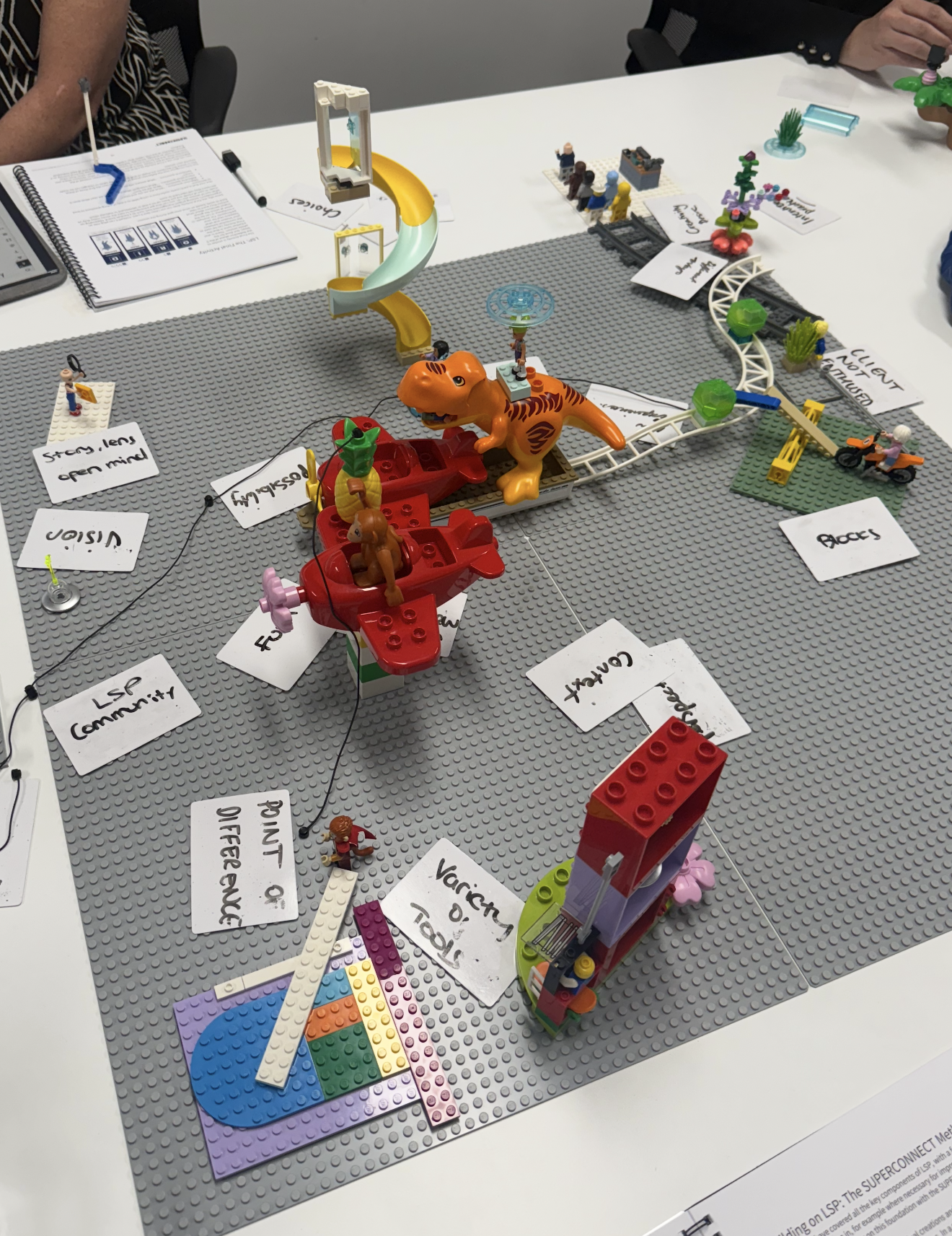
In a world where leadership and team development programs often rely on PowerPoint slides and long discussions, it’s easy for sessions to feel like just another meeting. But what if there was a way to unlock deeper thinking, spark real connection, and make ideas visible — all while having fun? Enter LEGO® Serious Play® (LSP) — a research-backed facilitation method that uses LEGO bricks to engage hands, minds, and hearts. It might sound playful (and yes, it is), but it’s far from child’s play. LSP is grounded in neuroscience and the theory of hand knowledge: when we build with our hands, we tap into different parts of the brain, unlocking creativity and insight that often stay hidden in traditional discussions. How Does It Work? Instead of asking participants to talk through a challenge or strategy, LSP invites them to build their thinking using LEGO bricks. Each person constructs a 3D model representing their ideas, experiences, or solutions, then shares the meaning behind what they’ve built. This approach ensures every voice is heard, not just the loudest in the room. The process fosters psychological safety , encourages inclusive participation , and helps teams uncover assumptions that shape behaviour. The models act as shared metaphors — powerful tools for building alignment, creating clarity, and solving complex problems. Why It Works LSP is effective because it blends creativity with structure. It’s based on the principles of constructivism (we learn best by making) and constructionism (making things externalises our thinking). It helps people move beyond habitual ways of seeing challenges, leading to: Deeper engagement — everyone participates, no one hides behind a laptop Inclusive conversations — every perspective matters and is represented Connection and trust — sharing stories through models builds empathy and understanding Breakthrough thinking — visualising problems and possibilities opens up new solutions Where Can It Be Used? LSP can be applied in leadership development, team culture workshops, strategic planning, change management, and even personal purpose work. It’s particularly powerful for: Aligning teams on values, vision, and strategy Building emotional culture maps and team norms Exploring leadership identity and purpose Navigating complex challenges where there’s no clear answer What This Means for Prospera Consulting’s Clients At Prospera Consulting, we’re committed to helping leaders and teams thrive through heart-centred, sustainable ways of working . We use a variety of proven methods — from coaching to creative facilitation — to spark insight, build connection and generate breakthroughs. One of these methods is LEGO® Serious Play®, because it brings those values to life. It’s inclusive, engaging and transformative , helping teams not only find answers but connect on a deeper level. When people feel safe to share, think differently, and co-create solutions, they experience what we believe leadership and teamwork should be about: collaboration, creativity and human connection .